
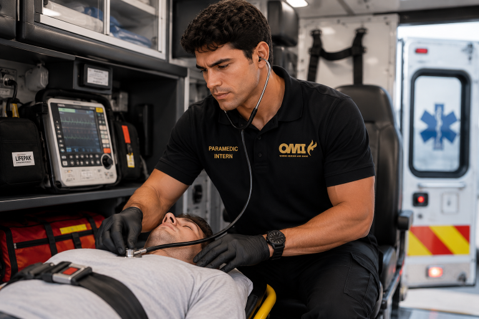
Knowing when to go to the emergency room versus when to call 911 can make a critical difference in a medical emergency. Many people are unsure which option is appropriate, especially when symptoms feel urgent but not clearly life-threatening. Understanding the difference can help ensure faster care, better outcomes, and potentially save lives.
For those interested in healthcare careers, especially Emergency Medical Technician training, learning how to assess emergencies and make these decisions is a foundational skill.

Understanding the Difference Between the ER and 911
The emergency room and 911 services both provide urgent medical care, but they serve different roles.
The emergency room is a hospital department where patients receive treatment for serious but not always immediately life-threatening conditions. Patients typically arrive by personal transportation or ambulance.
Calling 911 activates emergency medical services. EMTs and paramedics respond directly to the scene, provide immediate care, and transport patients safely to the hospital if needed.
Choosing the right option depends on the severity and urgency of the situation.
When You Should Call 911 Immediately
Calling 911 is the best option when a situation is life-threatening or could quickly become life-threatening. In these cases, waiting or attempting to drive to the hospital can be dangerous.
You should call 911 if someone is experiencing:
Chest pain or pressure that may indicate a heart attack
Signs of a stroke such as facial drooping, arm weakness, or slurred speech
Severe difficulty breathing or shortness of breath
Unconsciousness or inability to respond
Severe bleeding that does not stop
Seizures or convulsions
Serious injuries from accidents or trauma
Sudden confusion or altered mental status
In these situations, EMTs can begin treatment immediately upon arrival, which can be critical for survival.
When to Go to the Emergency Room
The emergency room is appropriate for serious medical issues that require prompt attention but are not immediately life-threatening.
You should go to the ER if you experience:
Moderate injuries such as broken bones without severe bleeding
High fever that does not improve
Persistent vomiting or dehydration
Severe pain that is not manageable at home
Minor head injuries without loss of consciousness
Cuts that may require stitches
In these cases, it is usually safe to travel to the hospital by car, which can also help keep emergency services available for more critical situations.
Why Calling 911 Can Save Lives
When you call 911, trained emergency professionals respond with the equipment and expertise needed to stabilize patients before they reach the hospital.
EMTs can:
Assess vital signs and symptoms on scene
Provide oxygen and basic life support
Control bleeding and stabilize injuries
Communicate with hospitals to prepare for arrival
Ensure safe and rapid transport
This early intervention is especially important for conditions like heart attacks, strokes, and severe trauma where every minute matters.
How EMTs Make Critical Decisions
Emergency Medical Technicians are trained to quickly evaluate patients and determine the severity of their condition. They use structured assessments and clinical judgment to decide the best course of action.
This includes:
Identifying life-threatening conditions
Prioritizing care based on symptoms
Choosing the appropriate medical facility
Providing immediate treatment during transport
These decision-making skills are developed through both classroom learning and hands-on training.
Why This Matters for Future EMT Students
For students considering a career in emergency medical services, understanding when to call 911 versus going to the ER is a core part of EMT education. EMTs must be able to recognize emergencies, respond quickly, and provide care under pressure.
This knowledge is essential not only for certification exams but also for real-world situations where fast, accurate decisions can save lives.
EMT Training at Orlando Medical Institute
For individuals in Orlando who want to pursue a career in healthcare, Orlando Medical Institute offers an Emergency Medical Technician training program designed to prepare students for real-world emergency situations.
Students learn how to assess patients, recognize life-threatening conditions, and respond appropriately in high-pressure environments. The program combines classroom instruction with hands-on training to help students build confidence and practical skills.
Upon successful completion, graduates are eligible to take examinations for certification as a Florida State Emergency Medical Technician and a Nationally Registered EMT.
Program Overview
The EMT program includes a structured combination of instruction and practical experience.
176 hours of classroom instruction
52 hours of laboratory training
72 hours of hands-on learning
300 total training hours
Applicants must be at least 18 years old, have a high school diploma or GED, and complete the required admissions assessment.
Flexible scheduling options are available, including day, evening, and weekend classes.
Start Your EMT Training in Orlando
Knowing when to go to the emergency room versus calling 911 is an important part of understanding how emergency care works. EMTs play a vital role in responding to critical situations and providing immediate care when it matters most.
If you are ready to build the skills needed to respond to emergencies and start a meaningful career in healthcare, enroll in the Emergency Medical Technician training program at Orlando Medical Institute in Orlando, Florida and take the first step toward becoming a certified EMT.
