
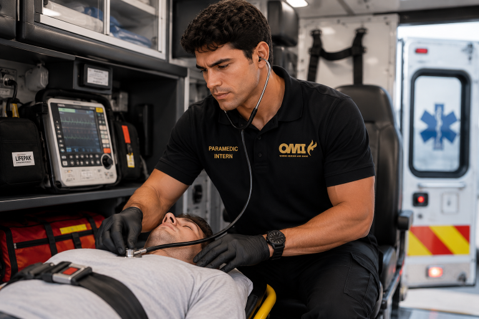
If you are considering a career as an Emergency Medical Technician, you may be wondering what EMT clinical rotations are like and what to expect during this important phase of training. Clinical rotations are one of the most valuable parts of EMT education because they provide real-world experience in healthcare settings.
For prospective EMT students, understanding how clinical rotations work can help you feel more prepared and confident as you begin your training.
What Is an EMT Clinical Rotation?
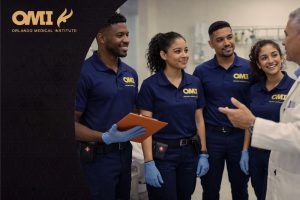
An EMT clinical rotation is a supervised, hands-on training experience where students apply what they have learned in the classroom to real patient care situations. These rotations typically take place in hospitals, emergency departments, or alongside emergency medical services teams.
During clinical rotations, students observe and assist healthcare professionals while gaining exposure to real medical scenarios. This experience helps bridge the gap between theory and practice.
What Do EMT Students Do During Clinical Rotations?
Clinical rotations are designed to give students practical experience in patient care. While responsibilities vary depending on the setting and level of training, EMT students may:
Assist with patient assessments
Observe emergency medical procedures
Take vital signs such as blood pressure and heart rate
Help prepare medical equipment
Support healthcare staff during patient care
Practice communication with patients and medical teams
Students are always supervised by experienced professionals to ensure safety and proper learning.
Where Do Clinical Rotations Take Place?
EMT clinical rotations can occur in a variety of healthcare environments. These settings provide students with a well-rounded understanding of emergency medical care.
Common clinical rotation sites include:
Hospital emergency departments
Ambulance services and EMS agencies
Urgent care centers
Specialized healthcare facilities
Each environment offers unique learning opportunities and helps students develop a broader perspective on patient care.
What a Typical Clinical Rotation Feels Like
For many students, clinical rotations are the first time they experience real patient care. This can feel both exciting and challenging.
A typical shift may include:
Observing patient intake in an emergency department
Assisting with basic care under supervision
Responding to calls with EMS teams
Practicing skills learned in class in real situations
Students often gain confidence quickly as they begin to apply their training in real-world scenarios.
Why Clinical Rotations Are Important
Clinical rotations are essential for developing the skills needed to succeed as an EMT. They provide opportunities to practice in real environments where quick thinking and effective communication are critical.
Key benefits of clinical rotations include:
Building confidence in patient care
Improving critical thinking and decision-making
Gaining exposure to real emergency situations
Learning how to work as part of a healthcare team
Preparing for certification exams and employment
This hands-on experience is a major reason why EMT training is so effective in preparing students for the workforce.
What to Expect as a New EMT Student
Many students enter clinical rotations with little to no prior medical experience. This is completely normal. EMT programs are designed to teach students everything they need to know, from basic patient assessment to emergency response.
During rotations, students are encouraged to ask questions, stay engaged, and take advantage of every learning opportunity. Each experience helps build the skills and confidence needed for a successful career.
EMT Training at Orlando Medical Institute
For students in Orlando interested in becoming Emergency Medical Technicians, Orlando Medical Institute offers a comprehensive training program that includes clinical rotations as a key component of learning.
Students gain hands-on experience in real healthcare settings while being guided by experienced instructors and medical professionals. The program is designed to help students develop both the knowledge and practical skills needed to respond to medical emergencies.
Upon successful completion of the program, students are eligible to take examinations for certification as a Florida State Emergency Medical Technician and a Nationally Registered EMT.
Program Overview
The EMT training program includes a balanced combination of classroom instruction, laboratory training, and clinical experience.
176 hours of classroom instruction
52 hours of laboratory training
72 hours of hands-on learning
300 total training hours
Applicants must be at least 18 years old, have a high school diploma or GED, and complete the required admissions assessment.
Flexible scheduling options are available, including day, evening, and weekend classes.
Start Your EMT Training in Orlando
Clinical rotations are one of the most exciting and valuable parts of EMT training. They give students the opportunity to apply their knowledge, gain real-world experience, and build the confidence needed to succeed in emergency medical services.
If you are ready to take the next step toward a healthcare career, enroll in the Emergency Medical Technician training program at Orlando Medical Institute in Orlando, Florida and begin your journey toward becoming a certified EMT.
