
Nosebleeds are common and can happen unexpectedly at home, at work, during exercise, or after an injury. While most nosebleeds are not serious, knowing what to do for a nosebleed can help control the bleeding and prevent unnecessary complications.
For students interested in healthcare and emergency medical services, learning basic first aid for common injuries is also an important foundation for understanding patient care.
What Causes a Nosebleed?
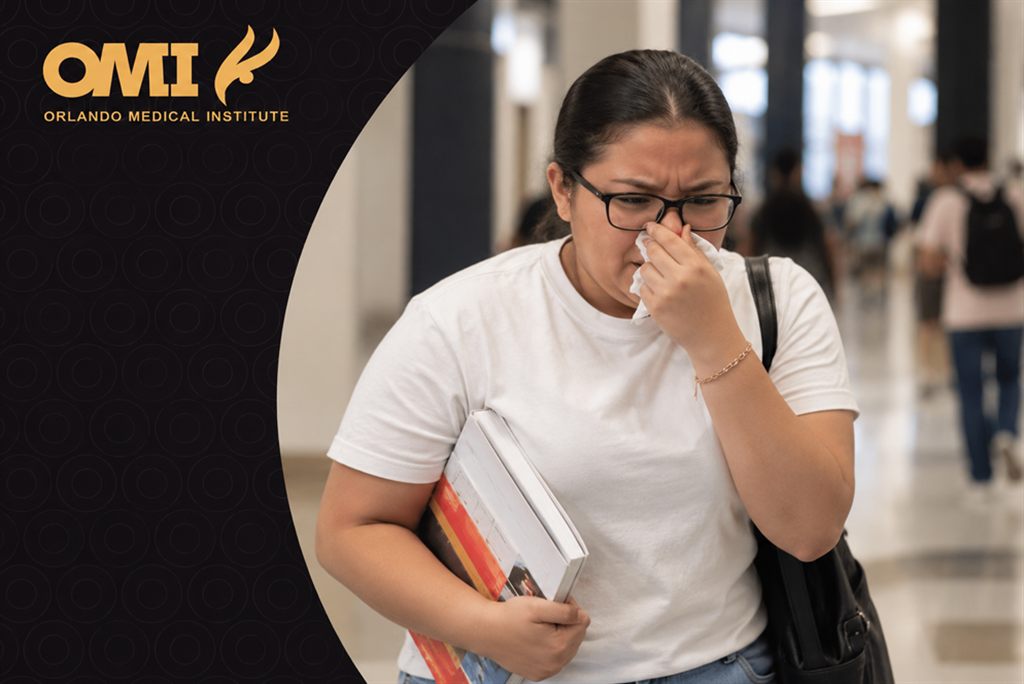
A nosebleed, medically known as epistaxis, occurs when small blood vessels inside the nose break and begin to bleed. Common causes include dry air, nose picking, blowing the nose forcefully, irritation, seasonal changes, and injuries. Certain medications and medical conditions can also make nosebleeds more likely or more difficult to stop.
Most nosebleeds begin in the front part of the nose and can usually be managed with basic first aid.
What to Do for a Nosebleed
If you or someone around you has a nosebleed, follow these basic steps:
1. Sit Upright and Lean Forward
Have the person sit upright and lean slightly forward. This helps prevent blood from flowing down the back of the throat, which can cause choking, nausea, or vomiting.
Avoid tilting the head backward.
2. Pinch the Nose
Use your thumb and index finger to firmly pinch the soft part of the nose just above the nostrils. Breathe through the mouth while maintaining continuous pressure.
Keep the nose pinched for about 10 to 15 minutes without repeatedly checking to see if the bleeding has stopped.
3. Remain Calm
Nosebleeds can look worse than they are because even a small amount of blood can spread quickly. Staying calm and maintaining pressure can help make the situation easier to manage.
4. Avoid Blowing or Picking the Nose
After the bleeding stops, avoid blowing or picking the nose because this can disturb the area and cause the bleeding to start again. Avoid strenuous activity for several hours as well.
When Should You Seek Medical Attention?
Most minor nosebleeds stop with proper first aid. However, medical attention may be necessary if:
- The bleeding is heavy
- The nosebleed continues for about 30 minutes despite applying pressure
- The person feels faint or weak
- The person has difficulty breathing
- The nosebleed follows a significant fall or injury
- Nosebleeds happen frequently
- The person takes blood-thinning medication
A nosebleed following a serious injury may require additional evaluation, particularly if there is concern about damage to the nose, head, or face.
Why First Aid Knowledge Matters for EMTs
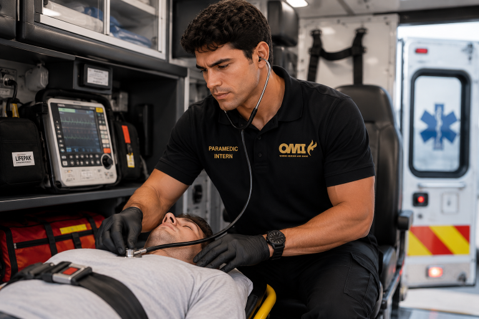
Knowing what to do for a nosebleed is one example of the practical skills that can be useful in emergency medical services. EMTs respond to patients with a wide range of injuries and illnesses, from minor bleeding to potentially life-threatening emergencies.
EMT training teaches students how to assess patients, recognize signs and symptoms, provide appropriate emergency interventions, and make informed decisions in changing situations.
These skills require more than memorizing information. EMT students need opportunities to practice what they learn through hands-on training, simulations, clinical experiences, and real-world scenarios.
EMT Training at Orlando Medical Institute
For students interested in becoming an EMT in Orlando, Florida, Orlando Medical Institute offers an Emergency Medical Technician program designed to provide comprehensive training in emergency medical care.
Students train through:
- Classroom instruction
- Laboratory exercises
- Hands-on training
- High-fidelity simulations
- Clinical rotations
- Real-world field experience
The program includes 300 total hours, with:
- 176 hours of classroom instruction
- 52 hours of lab training
- 72 hours of hands-on training
OMI also uses a flipped classroom model. Students complete core learning materials at home at their own pace, while classroom time focuses on interactive activities, practical application, and instructor feedback.
EMT Program Requirements in Orlando
Applicants must:
- Be at least 18 years old
- Have a high school diploma or GED
- Provide a valid Social Security card
- Provide a valid driver’s license or government-issued photo ID
- Complete the DAX admissions assessment
Before beginning clinical rotations, students must also complete required clinical compliance requirements, including health and immunization documentation, a TB/PPD test, a current physical, and a background check.
OMI offers day, evening, and weekend scheduling options to accommodate different student needs.
Start Your EMT Education at Orlando Medical Institute
Learning how to respond to common emergencies, including bleeding and injuries, is an important part of preparing for a career in emergency medical services. At Orlando Medical Institute, students build their knowledge through classroom education and practical training designed to prepare them for real-world emergency situations.
Upon successful completion of the EMT program, students will be eligible to take examinations for certification as a Florida State Emergency Medical Technician (EMT) and Nationally Registered EMT.
If you are interested in EMT training in Orlando, Florida, fill out the form to connect with an Orlando Medical Institute advisor and learn more about the program, admissions requirements, and available schedules.
