
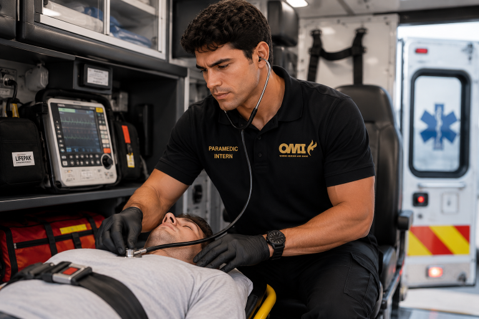
If you’re interested in a career in emergency medical services, you’ve likely come across two important roles: Emergency Medical Technician (EMT) and Paramedic. While both professionals are dedicated to saving lives and responding to emergencies, their education, responsibilities, and scope of practice are different.
Understanding the difference between an EMT and a paramedic can help you determine which career path best aligns with your goals. For many healthcare professionals, becoming an EMT is the first step toward advancing into a paramedic career.
What Is an EMT?
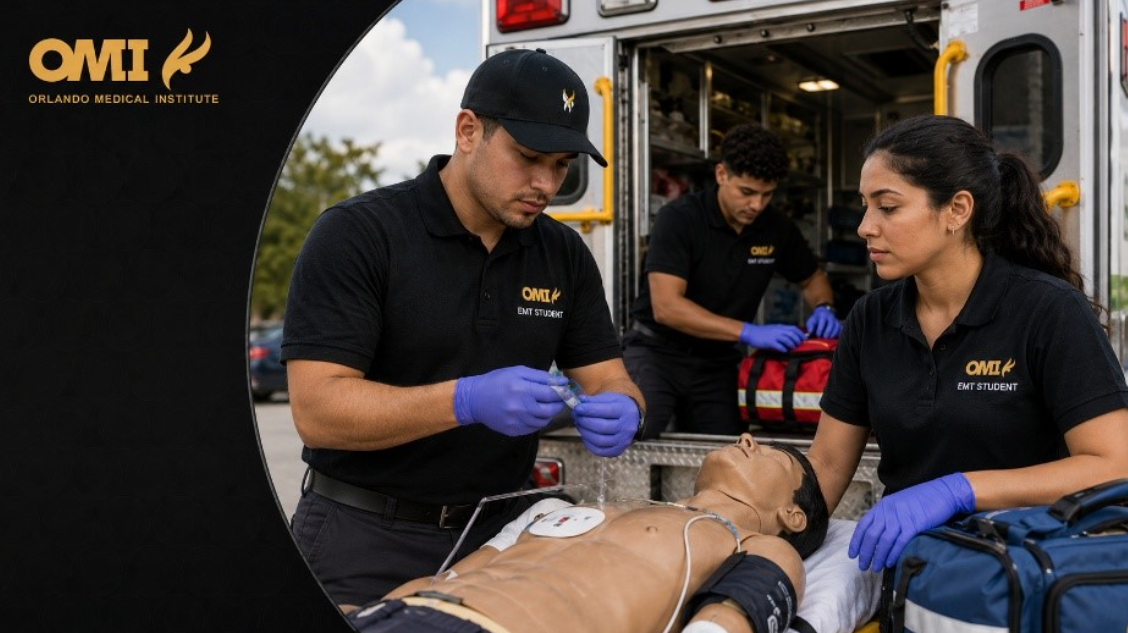
An Emergency Medical Technician (EMT) is a healthcare professional trained to provide basic emergency medical care before patients arrive at the hospital.
EMTs are often the first medical providers on the scene and are responsible for stabilizing patients during emergencies.
EMT responsibilities include:
- Assessing patients during medical emergencies
- Performing CPR and Basic Life Support (BLS)
- Managing airway emergencies
- Controlling bleeding and treating trauma
- Monitoring vital signs
- Safely transporting patients
- Communicating with hospitals and emergency personnel
EMTs provide critical care during the first moments of an emergency when every second matters.
What Is a Paramedic?
Paramedics receive advanced education beyond EMT training, allowing them to perform more complex medical procedures and provide advanced life support.
Depending on state regulations, paramedics may:
- Start intravenous (IV) lines
- Administer emergency medications
- Perform advanced airway procedures
- Interpret electrocardiograms (ECGs)
- Treat cardiac emergencies
- Manage severe trauma
- Provide advanced patient assessments
Paramedics often work alongside EMTs to provide comprehensive emergency medical care.
EMT vs. Paramedic: What’s the Difference?
Although EMTs and paramedics often work together, there are several important differences between the two careers.
EMTs focus on providing basic emergency care and stabilizing patients until they reach a medical facility.
Paramedics receive additional education that prepares them to perform advanced medical interventions and make more complex treatment decisions in the field.
The biggest differences include:
- Level of education and training
- Scope of practice
- Advanced medical procedures
- Medication administration
- Clinical decision-making responsibilities
Both careers play an essential role in emergency medicine and patient care.
Which Career Is Right for You?
Choosing between becoming an EMT or a paramedic depends on your personal and professional goals.
Becoming an EMT may be right for you if you:
- Want to begin working in healthcare quickly
- Enjoy helping others during emergencies
- Want hands-on patient care experience
- Plan to continue your education later
Becoming a paramedic may be a better fit if you:
- Want advanced medical responsibilities
- Enjoy critical thinking under pressure
- Want to lead emergency response teams
- Plan to build a long-term career in emergency medicine
Many successful paramedics begin their careers as EMTs before continuing their education.
Why Many Students Start as an EMT
For many students, EMT training provides an excellent foundation for a long-term healthcare career.
Working as an EMT allows students to:
- Gain real-world patient care experience
- Build confidence during emergencies
- Strengthen communication skills
- Develop teamwork and leadership abilities
- Prepare for advanced paramedic education
The experience gained as an EMT often makes the transition into paramedic school smoother and more rewarding.
Career Opportunities
Both EMTs and paramedics continue to be in demand throughout Florida and across the United States.
Career opportunities include:
- Ambulance services
- Fire rescue departments
- Hospital emergency departments
- Air medical transport
- Industrial safety organizations
- Event medical services
- Disaster response teams
Many EMS professionals continue their education and pursue careers in nursing, physician assistant programs, healthcare administration, and other medical specialties.
EMT and Paramedic Training at Orlando Medical Institute
If you’re ready to begin a rewarding career in emergency medical services, Orlando Medical Institute (OMI) offers comprehensive EMT and Paramedic programs designed to prepare students for success in the field.
Students receive classroom instruction, hands-on skills training, simulation exercises, and clinical experiences that prepare them for real-life emergency situations. Experienced instructors help students develop the knowledge, confidence, and practical skills needed to provide exceptional patient care.
Program Duration
OMI offers flexible scheduling options to help students balance school with their personal and professional responsibilities.
EMT Program
- Approximately 300 hours
- Day, evening, and weekend schedules available
Paramedic Program
- Approximately 1,110 hours
- Approximately 48 weeks
- Flexible scheduling options available
What You Will Learn
Students enrolled in OMI’s EMS programs receive comprehensive training in emergency medical care.
Training includes:
- Patient assessment
- CPR and Basic Life Support (BLS)
- Airway management
- Trauma care
- Medical emergency response
- Cardiac emergency management
- Emergency pharmacology (Paramedic Program)
- Medical equipment operation
- Team-based emergency response
- Professional communication
Students gain valuable hands-on experience through simulation labs and clinical training designed to prepare them for certification and employment.
Admission Requirements
Admission requirements vary depending on the EMS program.
Prospective students should be prepared to:
- Meet program-specific admission requirements
- Submit educational documentation
- Complete required health screenings
- Provide valid identification
- Work with the admissions team throughout the enrollment process
OMI’s admissions advisors are available to help prospective students determine which EMS program best fits their career goals.
Career Opportunities After Graduation
Graduates of Orlando Medical Institute’s EMS programs may pursue careers in a variety of emergency medical settings.
Career opportunities include:
- Emergency Medical Technician (EMT)
- Paramedic
- Fire Rescue
- Emergency Department Technician
- Medical Transport Services
- Industrial and Occupational Safety
- Disaster Response Teams
EMS professionals continue to play a critical role in protecting communities and responding to emergencies every day.
Begin Your EMS Career at Orlando Medical Institute
Understanding the difference between an EMT and a paramedic is an important first step toward choosing a career in emergency medical services. Whether you’re looking to begin your healthcare journey as an EMT or continue your education to become a paramedic, both career paths provide opportunities to make a meaningful impact on the lives of others.
At Orlando Medical Institute, students receive expert instruction, hands-on training, and real-world experience designed to prepare them for success in the fast-paced world of emergency medicine. Through quality education and practical learning opportunities, OMI equips students with the skills and confidence needed to excel in EMS careers.
If you’re ready to start or advance your career in emergency medical services, contact Orlando Medical Institute today to learn more about the EMT and Paramedic programs and take the first step toward your future in healthcare.
