
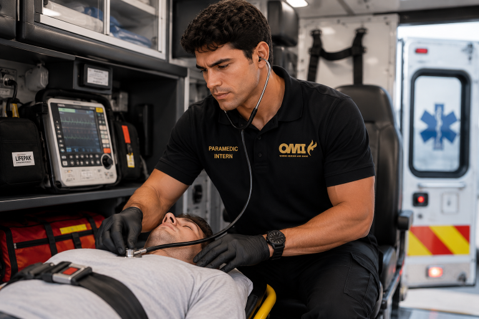
Starting your first job as an Emergency Medical Technician (EMT) is an exciting milestone. After completing training, earning your certification, and preparing for the responsibilities of emergency medical services (EMS), stepping onto an ambulance for the first time can still feel overwhelming.
The first 30 days on the rig often bring a learning curve. New EMTs must adjust to unfamiliar equipment, changing schedules, communication with partners, patient interactions, and the unpredictable nature of emergency calls. Feeling nervous is normal, especially when transitioning from a classroom environment to real-world patient care.
For new EMTs in Orlando, developing confidence takes time, preparation, and a willingness to learn. Understanding what to expect during your first shifts can help reduce anxiety and make the transition into EMS more manageable.

Why Do New EMTs Experience First-Shift Anxiety?
First-shift anxiety often comes from the difference between practicing emergency care in a controlled training environment and responding to situations involving real patients.
Even after completing an EMT program, new professionals may worry about making mistakes, forgetting procedures, or not knowing how to respond when a situation becomes stressful.
Common concerns include:
- Fear of making mistakes: New EMTs may worry about overlooking symptoms, missing important information, or performing a procedure incorrectly.
- Unfamiliar equipment: Learning where supplies are stored and how equipment is used can take time.
- Patient communication: Speaking with patients who are frightened, confused, or experiencing pain can feel challenging.
- Working with an experienced partner: New EMTs may feel pressure to demonstrate that they are capable and dependable.
- Unpredictable calls: Every emergency is different, and new responders may not know exactly what to expect.
- Adjusting to the schedule: Long shifts, overnight calls, and changing sleep patterns can affect energy and concentration.
These concerns are common during the transition into EMS. Confidence develops through preparation, supervised experience, feedback, and repeated practice.
How to Prepare Before Your First EMT Shift
Preparation can help reduce uncertainty before stepping onto the ambulance. Taking time to organize your responsibilities and review essential skills allows you to focus more attention on learning during your shift.
1. Review Your EMT Fundamentals
You do not need to memorize every detail of your training before your first shift, but reviewing foundational concepts can help you feel more prepared.
Focus on topics such as:
- Patient assessment procedures.
- Airway, breathing, and circulation.
- Vital sign assessment.
- Basic life support principles.
- Infection prevention and personal safety.
- Patient movement and lifting techniques.
- Communication and patient documentation.
Always follow your agency’s protocols, medical direction, and scope-of-practice requirements. If you are uncertain about a procedure, ask your partner or supervisor for guidance rather than guessing.
2. Learn the Ambulance and Its Equipment
One of the most helpful things a new EMT can do is become familiar with the ambulance before responding to calls.
During your shift preparation, ask your partner to walk you through the vehicle and explain where commonly used equipment is stored. Depending on the ambulance and agency, this may include:
- First aid and trauma supplies.
- Oxygen delivery equipment.
- Airway management equipment.
- Blood pressure cuffs and stethoscopes.
- Patient monitoring equipment.
- Stretchers and patient movement tools.
- Personal protective equipment.
Learn how equipment is checked, maintained, and restocked according to agency procedures. Familiarity with the ambulance can reduce unnecessary stress when you need to locate supplies quickly.
3. Ask Questions and Understand Expectations
Every EMS agency has its own procedures, communication expectations, and daily routines. Do not assume that every ambulance service operates exactly like the training environment.
Ask your partner or supervisor about shift responsibilities, equipment checks, documentation, communication procedures, and expectations for new employees.
Asking questions demonstrates that you are taking your responsibilities seriously. It is better to clarify something before an emergency than to remain uncertain during a patient encounter.
4. Prepare Yourself Physically and Mentally
EMS work can be physically and mentally demanding. New EMTs may experience long periods of activity, irregular meal times, and interrupted sleep.
Before your shift, prioritize adequate rest, eat balanced meals, and stay hydrated. Wear the required uniform and bring any approved personal items you may need throughout the day.
Mental preparation matters too. Remind yourself that you are entering a profession where learning continues long after certification. You are not expected to know everything on your first day.
Your First 30 Days as an EMT: What to Expect
The first month on the rig is an opportunity to become familiar with the work environment, strengthen your skills, and learn from experienced EMS professionals. While every agency and schedule is different, the following milestones can help new EMTs understand the transition.
Week 1: Focus on Learning the Routine
Your first week may involve adjusting to the ambulance, meeting your crew, understanding agency expectations, and becoming familiar with daily responsibilities.
Pay attention to how experienced EMTs organize equipment, communicate with patients, complete documentation, and coordinate with other emergency responders.
Rather than trying to prove yourself immediately, focus on being observant, dependable, and open to feedback.
Useful goals for your first week include:
- Learning the ambulance layout.
- Understanding equipment checks and restocking procedures.
- Becoming familiar with agency communication practices.
- Reviewing documentation expectations.
- Asking questions when instructions are unclear.
Week 2: Build Confidence Through Repetition
By the second week, some parts of the routine may begin to feel more familiar. You may become more comfortable preparing equipment, interacting with patients, and participating in calls under appropriate supervision.
Use each experience as an opportunity to improve. Pay attention to areas where you feel confident and identify skills that need additional practice.
After a call, consider asking your partner for constructive feedback. A short conversation about what went well and what could be improved can help you recognize progress.
Week 3: Strengthen Communication and Teamwork
Communication is one of the most important skills in emergency medical services. EMTs regularly interact with patients, family members, dispatchers, paramedics, firefighters, law enforcement officers, and hospital personnel.
During your third week, focus on communicating clearly and professionally.
Practice listening carefully, asking appropriate questions, and relaying relevant patient information. Learn how your partner prefers to coordinate responsibilities during calls and how your agency handles communication with receiving facilities.
Remember that teamwork does not mean knowing everything independently. It means understanding your role, respecting your colleagues, and working together to provide appropriate patient care.
Week 4: Reflect on Your Progress
By the end of your first month, you may notice that certain responsibilities feel more natural. You might be more comfortable with equipment, patient interactions, and the rhythm of an EMS shift.
However, the learning process does not stop after 30 days.
Take time to evaluate your progress. Consider which skills have improved, which situations still create anxiety, and what additional training or guidance could help.
Setting small professional goals can make continued development feel more manageable.
How to Handle Stress During Difficult EMS Calls
Not every emergency call will be straightforward. New EMTs may encounter patients experiencing severe pain, emotional distress, serious injuries, or life-threatening medical conditions.
It is important to develop healthy ways to manage stress while maintaining patient safety and professionalism.
- Focus on your immediate responsibilities. Instead of worrying about everything happening at once, concentrate on your assigned tasks and follow established protocols.
- Communicate with your partner. Clear communication helps prevent confusion and allows team members to coordinate patient care.
- Use your training. Return to the assessment methods and emergency procedures you learned during your education. Follow agency protocols and seek assistance when necessary.
- Recognize your emotional responses. Some calls may be difficult to process. Acknowledging stress is not a sign of weakness.
- Use available support resources. Talk with a trusted supervisor, peer, or appropriate professional when a call affects your emotional well-being. Follow agency procedures for debriefing and support after difficult incidents.
Developing healthy coping strategies early can help new EMTs maintain their well-being throughout their careers.
Common Mistakes New EMTs Should Avoid
Every new professional makes adjustments when entering a demanding field. Being aware of common mistakes can help you approach your first month with greater confidence.
- Pretending to know everything: Asking questions is safer and more professional than making assumptions.
- Skipping equipment checks: Knowing that supplies are available and ready is essential before responding to calls.
- Ignoring feedback: Constructive criticism can help you identify areas for improvement.
- Rushing patient interactions: Taking a moment to listen and communicate can help build trust and gather important information.
- Neglecting personal health: Sleep, nutrition, hydration, and stress management support safe and effective performance.
- Comparing yourself to experienced EMTs: Every professional starts somewhere. Focus on your own progress instead of expecting yourself to perform like someone with years of experience.
The goal during your first month is not perfection. It is developing safe habits, learning from experience, and becoming a reliable member of the EMS team.
How EMT Training Helps Prepare You for the First Shift
The transition from student to working EMT can feel intimidating, but quality training helps establish the foundation needed to enter the profession.
EMT education introduces students to patient assessment, emergency response procedures, medical terminology, communication, and hands-on care. Simulations and practical exercises also provide opportunities to apply classroom knowledge in realistic scenarios before entering clinical and field environments.
For aspiring EMTs in Orlando, developing these skills before beginning a career in EMS can make the transition into the workplace more manageable.
Start Your EMT Training at Orlando Medical Institute
If you are interested in becoming an EMT, Orlando Medical Institute (OMI) offers a comprehensive Emergency Medical Technician program designed to prepare students for the responsibilities of emergency medical services.
OMI’s program is taught by experienced instructors who help students develop an understanding of emergency medical principles and patient care. Training includes classroom instruction, hands-on laboratory exercises, high-fidelity simulations, clinical rotations, and real-world field experience.
The program includes 300 total training hours:
- 176 hours of classroom instruction.
- 52 hours of laboratory training.
- 72 hours of hands-on training.
OMI also incorporates a flipped classroom model. Students review core learning materials at home and use classroom time for interactive activities, practical application, and instructor feedback.
Upon successful completion of the program, students become eligible to take examinations for Florida State EMT and Nationally Registered EMT certification.
EMT Program Admission Requirements
Applicants must:
- Be at least 18 years old.
- Possess a high school diploma or GED.
- Provide a valid Social Security card.
- Present a valid driver’s license or government-issued photo ID.
- Complete the DAX admissions assessment.
Additional health documentation, immunization records, and a background check are required before clinical rotations.
Flexible EMT Class Schedules
OMI offers several schedule options:
- Day classes: Monday, Wednesday, and Thursday from 9 a.m. to 1 p.m.
- Evening classes: Monday, Wednesday, and Thursday from 6 p.m. to 10 p.m.
- Weekend classes: Friday from 6 p.m. to 10 p.m. and Saturday from 9 a.m. to 6 p.m.
Take the First Step Toward Your EMT Career
Feeling nervous before your first EMT shift is normal. The first 30 days on the rig are a time to learn, ask questions, strengthen your skills, and become more comfortable with the responsibilities of emergency medical services.
With preparation, patience, and a commitment to continued learning, new EMTs can build the confidence needed to grow in the profession.
If you are ready to begin your journey in emergency medical services, Orlando Medical Institute can help you take the first step. Complete the contact form to connect with an OMI advisor, learn more about the EMT program, and get answers to your enrollment questions.
