
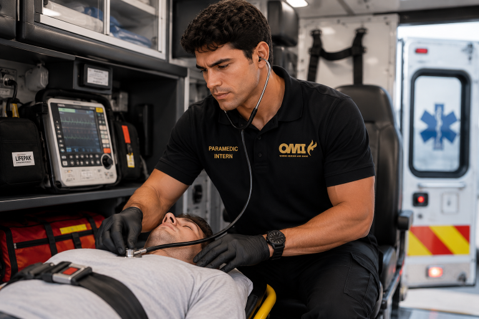
When most people think about paramedics, they picture an ambulance responding to an emergency. While emergency response is an important part of the profession, a paramedic’s responsibilities extend far beyond driving an ambulance or transporting patients.
So, what does a paramedic actually do?
Paramedics are trained emergency medical professionals who assess patients, provide advanced prehospital care, respond to medical and trauma emergencies, communicate with other healthcare professionals, and help patients reach the appropriate medical facility safely.
For students considering a career in emergency medical services, understanding what a typical shift may involve can help determine whether paramedic training is the right path.
Starting a Paramedic Shift
A paramedic’s day often begins before the first emergency call.
At the beginning of a shift, emergency medical personnel may inspect their ambulance and equipment to ensure they are prepared to respond.
This can include checking:
- Medical supplies
- Airway equipment
- Oxygen equipment
- Monitoring devices
- Emergency medications
- Trauma supplies
- Personal protective equipment
- Communication equipment
- Transportation equipment
Being prepared is an important part of emergency medicine because paramedics may not know what type of call they will receive next.
Responding to Emergency Calls
When an emergency call is received, paramedics must be prepared to respond quickly.
Emergency calls can involve many different situations, including:
- Difficulty breathing
- Chest pain
- Serious injuries
- Motor vehicle accidents
- Falls
- Allergic reactions
- Neurological emergencies
- Diabetic emergencies
- Cardiac emergencies
- Trauma
- Other urgent medical conditions
Every situation is different, requiring paramedics to evaluate the scene and determine what care a patient may need.
Assessing the Patient
Patient assessment is one of a paramedic’s most important responsibilities.
During an emergency, a paramedic may evaluate:
- Level of consciousness
- Airway
- Breathing
- Circulation
- Vital signs
- Symptoms
- Injuries
- Medical history
- Medications
- Information about what happened
Paramedics use this information along with their training and applicable medical protocols to determine appropriate next steps.
Providing Emergency Medical Care
Depending on the patient’s condition and the paramedic’s authorized scope of practice, treatment may include advanced emergency interventions.
Paramedics may be trained to assist with areas such as:
- Advanced airway management
- Cardiac monitoring
- Advanced life support
- Medication administration
- Trauma management
- Medical emergency management
- Patient stabilization
- Emergency transportation
Their goal is to provide appropriate prehospital care while preparing the patient for additional treatment at a healthcare facility.
Transporting Patients
Patient care continues during transportation.
While traveling to a healthcare facility, paramedics may:
- Continue monitoring vital signs
- Reassess the patient’s condition
- Provide necessary interventions
- Communicate with the receiving facility
- Prepare for changes in the patient’s condition
- Document care provided
Paramedics must balance patient care with communication and situational awareness throughout transportation.
Working as Part of a Healthcare Team
Paramedics rarely work alone.
Depending on the situation, they may work alongside:
- EMTs
- Firefighters
- Police officers
- Dispatchers
- Nurses
- Physicians
- Emergency department staff
- Other first responders
Clear communication and teamwork help ensure important information follows the patient from the emergency scene to the healthcare facility.
Completing Documentation and Preparing for the Next Call
Once a patient has been transferred to the appropriate healthcare team, the work is not necessarily finished.
Paramedics may need to complete patient care documentation, restock supplies, clean equipment, and prepare the ambulance for another call.
Accurate documentation is an important part of emergency medical care and helps create a record of the patient’s condition and treatment.
What Skills Help Paramedics Succeed?
Because every shift can bring different challenges, paramedics need a combination of clinical and interpersonal skills.
Important qualities include:
- Critical thinking
- Communication
- Compassion
- Leadership
- Teamwork
- Attention to detail
- Adaptability
- Time management
- Physical stamina
- Professionalism
- Ability to remain calm in stressful situations
Paramedics must be prepared to apply their training while communicating effectively with patients and other professionals.
Paramedic Training at OMI
Orlando Medical Institute provides career-focused emergency medical education designed to help students develop the skills required in the field.
Students can build upon foundational emergency medical knowledge while learning advanced concepts used in paramedic care.
Training combines classroom instruction with practical learning designed to help students understand how emergency medical concepts apply to real situations.
What You Will Learn
Paramedic training may include:
- Advanced patient assessment
- Airway management
- Cardiology
- Pharmacology
- Medical emergencies
- Trauma care
- Advanced life support
- Patient monitoring
- Emergency medications
- Communication
- Documentation
- Clinical decision-making
- Patient transportation
The goal is to help students build the knowledge, skills, and professional judgment necessary for emergency medical environments.
Admission Requirements
Prospective students should review OMI’s current Paramedic program requirements before enrolling.
The admissions process may require students to:
- Meet program eligibility requirements
- Provide educational documentation
- Meet applicable prerequisites
- Submit required identification and enrollment paperwork
- Complete required admissions steps
- Speak with an admissions representative
An OMI admissions representative can provide current information regarding prerequisites, enrollment, and program requirements.
Career Opportunities After Paramedic Training
After completing applicable education, certification, and licensure requirements, paramedics may pursue opportunities with:
- Ambulance services
- Fire and rescue departments
- Emergency medical service organizations
- Healthcare facilities
- Public safety agencies
- Medical transportation providers
Requirements vary depending on the position, employer, and location.
Prepare for a Career in Emergency Medical Services at OMI
A day in the life of a paramedic can be unpredictable, challenging, and meaningful. Paramedics use their education and skills to assess patients, provide emergency medical care, communicate with healthcare teams, and support people during some of their most critical moments.
For students who want an active healthcare career centered around emergency medicine and patient care, paramedic training may provide an exciting path forward.
At OMI, students receive career-focused emergency medical education designed to help them develop practical skills and prepare for opportunities in the field.
Contact OMI today to learn more about Paramedic training, admission requirements, and how you can begin working toward your future in emergency medical services.
