
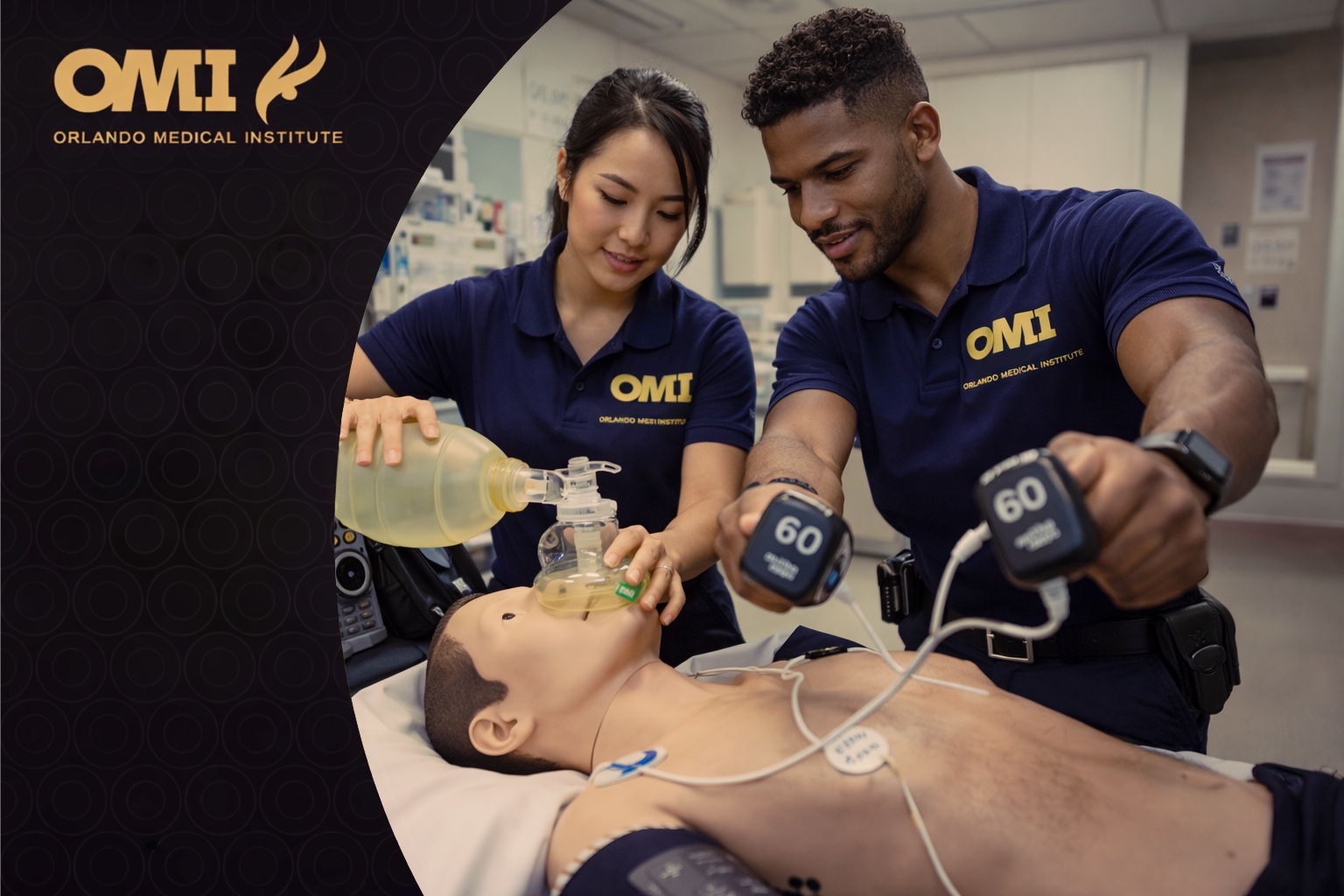
Emergency Medical Technicians play a critical role in responding to medical emergencies and providing lifesaving care before patients reach the hospital. Because EMTs often work in unpredictable environments such as accident scenes, homes, or public spaces, they rely on specialized equipment designed for rapid assessment and treatment.
If you are considering a career in emergency medical services, understanding the equipment EMTs use can help you better visualize what the job looks like and what you will learn during EMT training.

Why EMT Equipment Is Essential in Emergency Medical Services
EMTs must be able to assess patients quickly, stabilize injuries, and provide care during transport to medical facilities. Unlike hospital staff who have access to large amounts of equipment in one location, EMTs carry portable tools that allow them to treat patients wherever an emergency occurs.
These EMS tools help EMTs:
Assess patient conditions
Provide lifesaving interventions
Stabilize injuries or medical emergencies
Transport patients safely to hospitals
Learning how to properly use this equipment is a major part of EMT education and training.
Common Patient Assessment Tools EMTs Use
Patient assessment is one of the first steps in emergency medical care. EMTs use diagnostic tools that help them quickly determine the patient’s condition and prioritize treatment.
Some of the most common patient assessment tools include:
Stethoscopes used to listen to heart and lung sounds
Blood pressure cuffs used to monitor circulation
Pulse oximeters that measure oxygen levels in the blood
Thermometers that check body temperature
Penlights used to evaluate pupil response
These tools provide critical information that helps EMTs make fast and informed medical decisions.
Airway and Breathing Equipment
Maintaining a patient’s airway and breathing is one of the most important responsibilities in emergency medical care. EMTs carry several tools designed to assist patients who are having difficulty breathing.
Examples of airway and breathing equipment include:
Bag valve masks used to help patients breathe
Oxygen tanks that provide supplemental oxygen
Airway adjuncts that help keep the airway open
Portable suction devices used to clear obstructions
Proper airway management can make the difference between life and death in many emergency situations.
Trauma Care Tools
Many emergency calls involve injuries from accidents or traumatic events. EMTs carry trauma care equipment to stabilize patients and prevent further injury before transport.
Common trauma tools include:
Bandages and gauze for controlling bleeding
Tourniquets used for severe bleeding control
Splints used to immobilize fractures
Cervical collars used to stabilize the neck and spine
Trauma shears used to remove clothing quickly during assessments
These tools allow EMTs to treat injuries quickly while preparing patients for safe transport to the hospital.
Patient Transport Equipment
In addition to providing care, EMTs must safely move patients from the scene of an emergency to an ambulance and then to a healthcare facility. Specialized transport equipment makes this process safer for both patients and medical providers.
Common transport equipment includes:
Stretchers used to move patients into ambulances
Stair chairs designed for tight spaces and staircases
Backboards used for spinal immobilization
Patient securing straps and safety devices
Proper training ensures EMTs can transport patients safely while continuing medical care.
Learning to Use EMS Equipment During EMT Training
Using EMS equipment effectively requires both technical knowledge and hands-on practice. EMT training programs teach students how to properly handle medical tools while responding to realistic emergency scenarios.
Students typically learn through a combination of classroom instruction, laboratory exercises, simulation training, and real-world clinical experience. This approach helps prepare future EMTs to remain calm and effective during high-pressure situations.
Start Your EMT Training in Orlando
If you are interested in a career in emergency medical services, learning how to use EMS tools is one of the many skills you will develop during EMT training. These tools allow EMTs to assess patients, manage emergencies, and deliver lifesaving care in critical situations.
Orlando Medical Institute offers an Emergency Medical Technician training program in Orlando, Florida that prepares students with the knowledge and practical experience needed to pursue EMT certification and begin a career in emergency medical services.
