
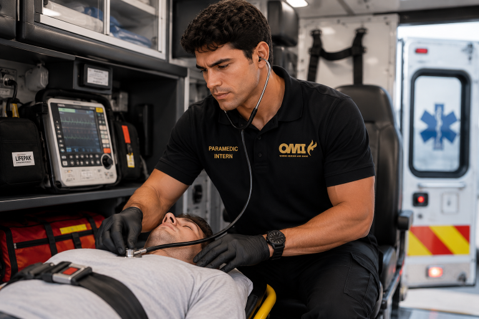
When you call 911, every second matters. Emergency Medical Technicians are trained to respond quickly, assess the situation, and begin care immediately upon arrival. But what exactly happens when an EMT arrives on scene?
Understanding this process not only helps the public feel more prepared during emergencies, but also gives prospective students insight into what a career in emergency medical services truly involves.

The First Priority: Scene Safety
Before anything else, EMTs assess the safety of the scene. This step is critical to ensure that both the patient and responders are not in immediate danger.
EMTs quickly look for hazards such as traffic, fire, unstable structures, or violent situations. If necessary, they coordinate with law enforcement or fire personnel to secure the area before proceeding.
Initial Patient Assessment
Once the scene is safe, EMTs move quickly to evaluate the patient. This is known as the primary assessment and focuses on identifying life-threatening conditions.
During this step, EMTs check:
Airway to ensure the patient can breathe
Breathing to determine if it is adequate
Circulation to assess pulse and control bleeding
This rapid evaluation allows EMTs to prioritize care and take immediate action if needed.
Providing Immediate Care
If a life-threatening issue is identified, EMTs begin treatment right away. Their goal is to stabilize the patient as quickly as possible.
This may include:
Administering oxygen
Controlling bleeding
Performing CPR if necessary
Using an automated external defibrillator
Immobilizing injuries
These interventions are critical in the first moments of an emergency and can make a significant difference in outcomes.
Gathering Patient Information
After addressing immediate threats, EMTs gather more detailed information about the patient’s condition. This is called the secondary assessment.
They may ask questions about:
Symptoms and when they started
Medical history
Medications
Allergies
They also take vital signs such as blood pressure, heart rate, and oxygen levels to better understand the patient’s condition.
Preparing for Transport
Once the patient is stabilized, EMTs prepare for transport to the nearest appropriate medical facility. This involves carefully moving the patient onto a stretcher and into the ambulance.
During transport, EMTs continue monitoring the patient, providing care, and updating the receiving hospital with critical information.
Communication and Teamwork
EMTs do not work alone. They are part of a coordinated emergency response system. Throughout the call, they communicate with dispatch, hospitals, and other responders to ensure the patient receives seamless care.
Clear communication is essential for making informed decisions and delivering effective treatment.
Why This Process Matters
Each step an EMT takes on scene is designed to save lives and prevent conditions from worsening. From the moment they arrive to the moment the patient reaches the hospital, EMTs play a vital role in emergency care.
For those considering a career as an EMT, this fast-paced, hands-on environment is both challenging and rewarding. It requires strong critical thinking skills, the ability to stay calm under pressure, and a commitment to helping others.
Train for Real World Emergencies at Orlando Medical Institute
If you are inspired by the role EMTs play on scene, Orlando Medical Institute offers an Emergency Medical Technician training program in Orlando, Florida designed to prepare students for these real-world situations.
Students learn how to assess patients, provide immediate care, and make critical decisions through a combination of classroom instruction, hands-on labs, simulations, and real-world experience. This comprehensive approach helps build confidence and ensures graduates are ready to respond effectively in emergencies.
The program also incorporates a modern flipped classroom model, allowing students to learn foundational material at their own pace while focusing on practical application during class time.
Program Overview and Requirements
The EMT program is structured to provide a well-rounded education while remaining accessible to prospective students.
The training includes 300 total hours, combining classroom instruction, lab work, and hands-on experience.
To enroll, students must:
Be at least 18 years old
Have a high school diploma or GED
Provide valid identification and required documentation
Complete the admissions assessment
Students must also complete clinical compliance requirements before participating in hands-on training environments.
Flexible scheduling options, including day, evening, and weekend classes, make it easier to start your training while balancing other responsibilities.
Start Your EMT Career in Orlando
Knowing what happens when an EMT arrives on scene highlights the importance of proper training and preparation. If you are ready to step into a career where your actions can make a life-saving difference, the right education is the first step.
Enroll in the Emergency Medical Technician training program at Orlando Medical Institute in Orlando, Florida and gain the knowledge, hands-on experience, and confidence needed to respond to emergencies and begin your career in emergency medical services.
