
A car accident can happen in seconds and leave drivers and passengers unsure of what to do next. Knowing what to do after a car accident can help protect you, your passengers, and others at the scene while emergency responders are on the way.
Even when an accident appears minor, injuries may not be immediately obvious. NHTSA recommends seeking medical attention after a crash, even if you do not initially think you are injured.
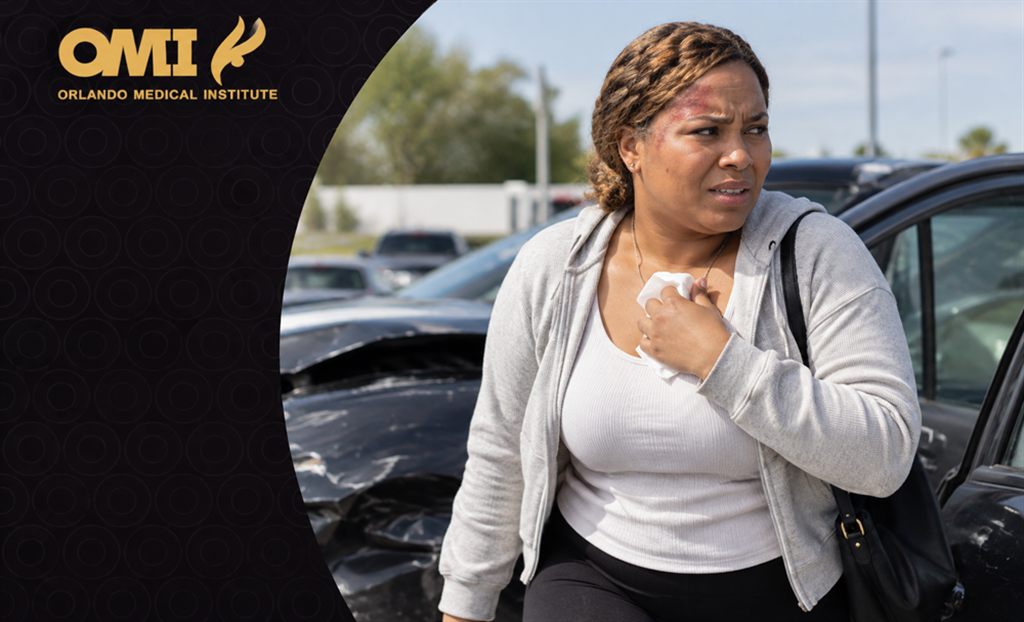
What to Do Immediately After a Car Accident
1. Check the Scene for Safety
Before getting out of your vehicle or approaching another person, look for immediate dangers such as moving traffic, fire, leaking fuel, or damaged power lines.
If it is safe to do so, move to a safer location away from traffic. Drivers approaching emergency vehicles or stopped vehicles with flashing lights should slow down and move over when possible.
2. Call 911
Call 911 if anyone is injured, unconscious, having trouble breathing, experiencing severe bleeding, or if there is another immediate danger.
Give the dispatcher the location of the accident and provide information about the number of people involved and any visible injuries. Staying on the line and following the dispatcher’s instructions can help until EMS arrives.
3. Check for Injuries
If it is safe, check yourself and others involved in the accident for signs of injury. Look for:
- Heavy bleeding
- Difficulty breathing
- Loss of consciousness
- Severe pain
- Confusion or unusual behavior
- Difficulty moving
- Signs of a possible head, neck, or spinal injury
Avoid asking someone to move if you suspect a head, neck, or spinal injury unless moving them is necessary to protect them from immediate danger.
4. Provide Basic First Aid
If someone has severe bleeding, apply appropriate first aid within the limits of your training while waiting for EMS. If a person is unresponsive and not breathing normally, call 911 and begin CPR if you are trained to do so.
Do not attempt to provide care beyond your level of training. Your first priorities should be keeping the scene safe, contacting emergency services, and following dispatcher instructions.
What Injuries Can Happen After a Car Accident?
Car accidents can cause many types of injuries, including:
- Cuts and bleeding
- Bruises
- Broken bones
- Sprains and strains
- Head injuries
- Neck and back injuries
- Chest injuries
- Internal injuries
Some injuries may not be immediately noticeable because adrenaline can temporarily mask pain. This is one reason medical evaluation can be important after a crash.
Why EMTs Play an Important Role After Car Accidents
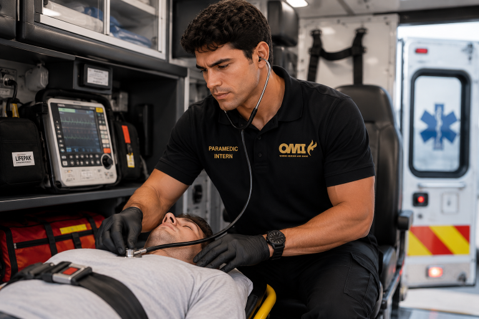
EMTs are often among the first healthcare professionals to assess people after a serious accident. They must quickly evaluate the scene, identify potentially life-threatening injuries, provide emergency care, and determine the appropriate next steps for each patient.
This requires more than knowing basic first aid. EMTs need training in patient assessment, emergency interventions, trauma care, communication, and decision-making in stressful environments.
For students interested in emergency medical services, learning how to respond to accidents and injuries can be an important step toward a career in healthcare.
EMT Training at Orlando Medical Institute
For students interested in becoming an EMT in Orlando, Florida, Orlando Medical Institute offers an Emergency Medical Technician program designed to provide comprehensive training in emergency medical care.
Students receive training through:
- Classroom instruction
- Laboratory exercises
- Hands-on training
- High-fidelity simulations
- Clinical rotations
- Real-world field experience
The program includes 300 total hours, with:
- 176 hours of classroom instruction
- 52 hours of lab training
- 72 hours of hands-on training
OMI also uses a flipped classroom model. Students complete core learning materials at home at their own pace, while classroom time focuses on interactive activities, practical application, and instructor feedback.
EMT Program Requirements in Orlando
Applicants must:
- Be at least 18 years old
- Have a high school diploma or GED
- Provide a valid Social Security card
- Provide a valid driver’s license or government-issued photo ID
- Complete the DAX admissions assessment
Before beginning clinical rotations, students must also complete required clinical compliance requirements, including health and immunization documentation, a TB/PPD test, a current physical, and a background check.
OMI offers day, evening, and weekend scheduling options for students.
Start Your EMT Education in Orlando
Knowing what to do after a car accident can help people respond more safely and effectively during an emergency. For those interested in healthcare, EMT training provides the opportunity to develop these skills in a structured educational environment.
At Orlando Medical Institute, students learn how to assess patients, respond to injuries and illnesses, and make informed decisions through classroom instruction, hands-on practice, simulations, clinical rotations, and field experience.
Upon successful completion of the EMT program, students will be eligible to take examinations for certification as a Florida State Emergency Medical Technician (EMT) and Nationally Registered EMT. If you are interested in EMT training in Orlando, Florida, fill out the form to connect with an Orlando Medical Institute advisor and learn more about the program, admissions requirements, and available schedules.
