
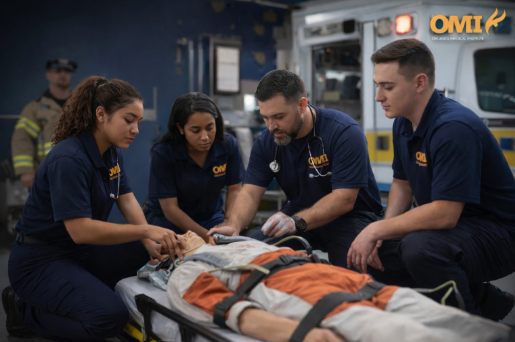
Choosing the right healthcare training program is one of the most important decisions you will make when preparing for a career in emergency medical services or allied health. While online learning can provide foundational knowledge, hands on training is what truly prepares students for real world medical situations.
If you are considering a program in EMS or healthcare, understanding the value of practical, in person training can help you make a confident and informed decision.

What Is Hands On Training in Healthcare Education?
Hands on training refers to structured, supervised practice in clinical labs, simulation environments, and real healthcare settings. Instead of only reading about procedures, students physically perform them under the guidance of experienced instructors.
In EMS and healthcare programs, this may include:
- Performing patient assessments
- Practicing CPR and airway management
- Learning how to operate medical equipment
- Drawing blood or performing EKGs
- Simulating emergency response scenarios
- Working directly with patients during clinical rotations
This type of immersive learning builds both technical ability and confidence.
Why Hands On Training Is Essential in EMS Programs
Emergency medical services is a fast paced, high responsibility field. EMTs and paramedics must make quick decisions while delivering immediate patient care.
Hands on EMS training allows students to:
- Develop muscle memory for critical procedures
- Improve decision making under pressure
- Practice communication with patients and team members
- Gain experience in realistic emergency scenarios
Simulation labs recreate real life emergencies so students can practice safely before entering the workforce. This preparation reduces anxiety and improves performance once they begin working in the field.
The Difference Between Online Learning and Practical Training
Online coursework can teach theory, medical terminology, and foundational concepts. However, healthcare is a hands on profession.
Employers consistently look for candidates who can demonstrate:
- Clinical competence
- Proper patient interaction
- Safe equipment handling
- Professionalism in medical settings
Programs that emphasize in person labs and clinical experience better prepare students to meet these expectations.
How Hands On Training Builds Career Readiness
Healthcare employers value graduates who can step into a role with confidence. Practical training helps students transition smoothly from the classroom to the workplace.
Benefits of strong hands on education include:
- Greater confidence during job interviews
- Stronger resumes with clinical experience
- Familiarity with real medical equipment
- Improved teamwork and communication skills
Students who train in realistic environments are often better prepared for the demands of healthcare careers.
What to Look for in a Healthcare Training Program
When researching EMS or healthcare schools, prospective students should ask:
- Does the program include structured lab training?
- Are simulation scenarios part of the curriculum?
- Is there a clinical or externship component?
- Are instructors experienced healthcare professionals?
A program that integrates hands on training throughout the curriculum can make a significant difference in long term career success.
Preparing for a Real Career in Healthcare
Healthcare professionals are responsible for patient safety, critical decision making, and compassionate care. These skills cannot be developed through theory alone.
Hands on training bridges the gap between knowledge and action. It allows students to practice, improve, and gain confidence before entering the workforce.
For students pursuing careers in EMS and allied health, choosing a program that prioritizes practical, in person training can be one of the most important steps toward long term success.
